


TL;DR:
- A Bulgaria holiday offers affordable travel with rich history and scenic coastlines. Travellers should plan around public holidays and choose the best season for their interests to maximize value. With EU membership and euro adoption, Bulgaria remains an economical and attractive destination for tourists and business visitors alike.
A Bulgaria holiday is one of Europe’s most underrated travel experiences, combining 7,000 years of history with affordable Black Sea coastlines, mountain resorts, and vibrant cities. Bulgaria joined the Eurozone on january 1, 2026, making currency exchange simpler for travelers from across the EU and beyond. The country remains significantly cheaper than Western Europe, and its calendar of public holidays and festivals adds cultural depth to any visit. Whether you are planning a beach escape, a cultural tour, or a combined business and leisure trip, understanding Bulgaria’s seasonal rhythms and local customs will determine how much value you extract from your time there.
When is the best time for a Bulgaria holiday?
Bulgaria’s climate divides cleanly into four distinct seasons, and each one suits a different type of traveler. The Black Sea coast peaks in july and august, when temperatures reach 30°C and resorts fill to capacity. Mountain areas like the Rhodopes and Rila are best visited from late june onward, when snow-free mountain trails open for hiking. Families with young children favor july for the calm, shallow Black Sea waters along the northern coast.
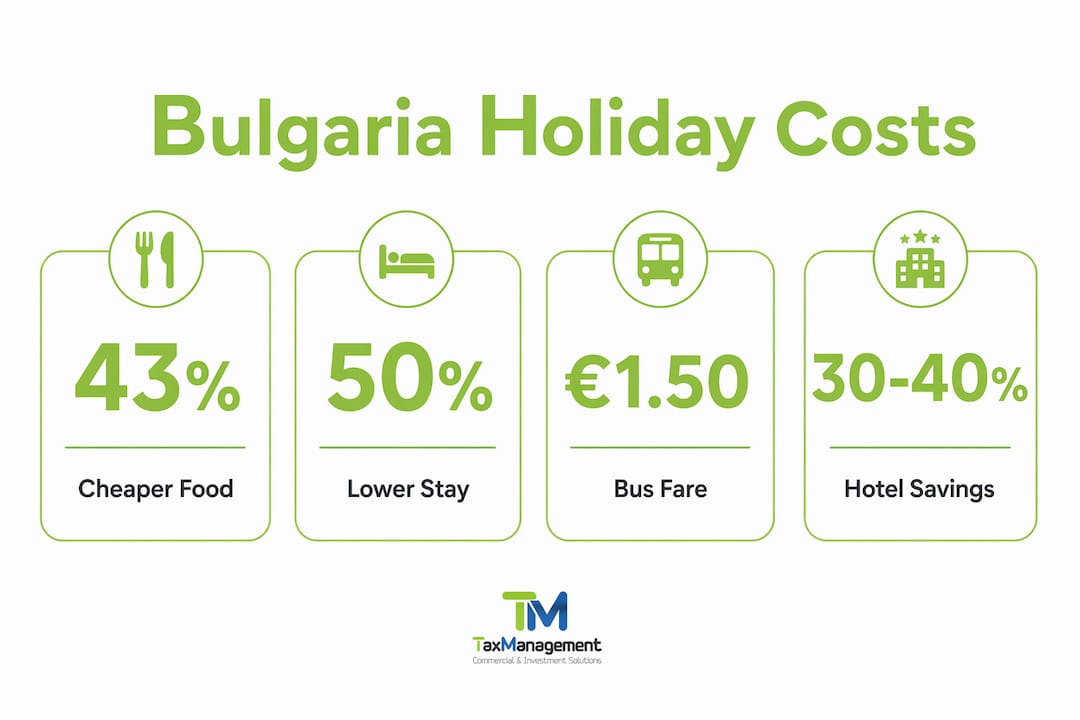
Shoulder months offer the best combination of good weather and lower prices. june and september deliver warm temperatures, thinner crowds, and noticeably cheaper accommodation. Booking coastal hotels two to three months ahead of the peak july to august window saves up to 30–40% compared to last-minute bookings. That saving alone can fund several extra nights or a day trip to a historic inland city.
Public holidays and festivals in 2026
Bulgaria observes 18 public holidays in 2026, including six long weekends. That figure matters for travelers because shops, banks, and some restaurants close or operate reduced hours on these dates. Key dates include Liberation Day on march 3, Independence Day on september 22, and an extended Christmas holiday period in late december. Planning arrivals around these dates avoids logistical friction, particularly in smaller towns where services are limited.
- March 3 — Liberation Day: national celebrations, parades in Sofia and Plovdiv; expect higher hotel demand.
- May 1 — Labor Day: long weekend, popular for domestic travel to mountain resorts.
- May 6 — St. George’s Day: a major cultural celebration with outdoor gatherings.
- September 22 — Independence Day: public events in most cities; some businesses close.
- December 24–26 — Christmas holidays: extended closure period; book accommodation well in advance.
Pro Tip: Book accommodation for the march 3 Liberation Day weekend at least six weeks ahead. Sofia hotels fill quickly as domestic and international visitors converge for the national celebrations.
Which Bulgarian destinations suit different types of travelers?
Bulgaria’s geography creates three distinct holiday zones: the Black Sea coast, the historic inland cities, and the mountain regions. Each zone attracts a different traveler profile, and each carries a different price point.
The Black Sea coast is the most visited zone. Sunny Beach is Bulgaria’s largest resort and caters primarily to younger travelers seeking nightlife, water parks, and all-inclusive packages. Golden Sands, north of Varna, offers a calmer atmosphere with family-friendly hotels and cleaner beaches. Sozopol and Nessebar are smaller coastal towns with preserved old towns and a more cultural atmosphere, suitable for travelers who want sea access without the resort crowds.
Sofia, the capital, rewards travelers who want urban culture on a tight budget. The city holds the Alexander Nevsky Cathedral, the National History Museum, and a thriving café and restaurant scene. Plovdiv, Bulgaria’s second city, is the more atmospheric choice for history enthusiasts. Its Old Town contains Roman amphitheaters, Ottoman-era architecture, and a dense gallery district that earned it the title of European Capital of Culture in 2019.
| Destination | Best for | Atmosphere | Budget range (per night) |
|---|---|---|---|
| Sunny Beach | Young adults, nightlife | High energy, resort | €30–€70 |
| Golden Sands | Families | Relaxed, beach-focused | €40–€90 |
| Sozopol | Culture seekers | Quiet, historic | €35–€75 |
| Sofia | City travelers | Urban, cosmopolitan | €40–€100 |
| Plovdiv | History enthusiasts | Artistic, walkable | €30–€70 |
| Bansko | Skiers, hikers | Mountain, seasonal | €35–€80 |
How to choose accommodations in Bulgaria
Accommodation in Bulgaria spans international hotel chains, locally owned guesthouses called mehanas, and short-term apartment rentals. Each option suits a different travel style and budget. Hotels in resort areas offer convenience and amenities, but they carry a price premium, particularly in july and august. Mehanas and family-run guesthouses in inland towns and villages offer authentic Bulgarian hospitality at a fraction of the resort cost.

Bulgaria is approximately 43% cheaper than the Netherlands or Germany and around 50% cheaper than the UK for food and services. That affordability extends to accommodation when travelers move even slightly away from the main tourist strips. A guesthouse in a village near Plovdiv or in the Rhodope Mountains can cost €25–€45 per night and include a home-cooked breakfast.
Dining and transport costs
Transport costs vary sharply depending on your choices. Public orange buses in Sofia and other cities cost roughly €1.50 per ride. A taxi covering the same route can cost €40. The difference is not a minor convenience trade-off. It is a budget decision that compounds across a week-long trip.
Dining follows the same pattern. Eating on Flower Street in Sunny Beach costs nearly double what you pay at a local mehana ten minutes inland. Tourist-strip restaurants charge around €12 per main course. A local tavern serves authentic Bulgarian food for around €6.50. Walking ten minutes away from the seafront promenade is the single most effective cost-saving move available to travelers in resort areas.
Pro Tip: Opt for inland dining at a local mehana rather than seafront tourist restaurants. The food is more authentic and the savings across a week can cover an additional night’s accommodation.
What practical tips will improve your Bulgaria holiday?
Practical preparation separates a smooth trip from a frustrating one. Several specific factors catch first-time visitors off guard, and addressing them before you travel removes avoidable complications.
Understand Bulgarian gestures
The most disorienting cultural difference for Western visitors is the Bulgarian head-nod convention. A vertical nod means “no.” A horizontal shake means “yes.” This is the direct opposite of the Western norm. Younger Bulgarians and staff in tourist areas often adapt to Western conventions, but awareness of the traditional gesture prevents genuine miscommunication in markets, local restaurants, and smaller towns.
Choose the right airport
Selecting the correct airport is one of the most consequential pre-trip decisions you will make. Varna Airport serves the northern Black Sea coast, including Golden Sands. Burgas Airport is the correct choice for Sunny Beach and the southern coast. Sofia Airport connects to the capital, Plovdiv, and the mountain resorts. Flying into Varna when your hotel is near Sunny Beach adds two hours of ground travel and unnecessary taxi costs.
Additional practical considerations
- Currency: Bulgaria adopted the euro on january 1, 2026. You no longer need to exchange currency if you are traveling from the Eurozone. Visitors from the UK or US should exchange at banks or ATMs rather than airport kiosks for the best rates.
- Public transport: Orange city buses are the most affordable urban transport option. Intercity buses connect Sofia, Plovdiv, Varna, and Burgas reliably and cheaply.
- Holiday closures: Check the Bulgarian public holiday calendar before planning day trips. Smaller towns close most services on national holidays.
- Tipping: A 10% tip is standard in restaurants. Rounding up the bill is acceptable in cafés and taxis.
“Understanding local nuances like airport selection and dining beyond tourist areas transforms the traveler experience positively.” — Insider travel guidance on visiting Bulgaria.
The euro adoption in 2026 has not triggered significant price increases, which means Bulgaria retains its position as one of the most cost-effective destinations in the EU. Travelers who combine this affordability with informed choices about transport, dining, and accommodation timing will find the country delivers exceptional value.
Key Takeaways
A Bulgaria holiday delivers the strongest value when travelers time their visit carefully, choose the right airport, eat away from tourist strips, and book accommodation at least two to three months ahead of peak season.
| Point | Details |
|---|---|
| Best booking window | Reserve coastal hotels 2–3 months ahead to save up to 30–40% on peak-season rates. |
| Airport selection | Match your airport to your destination: Burgas for Sunny Beach, Varna for Golden Sands, Sofia for the capital. |
| Dining savings | Eating at a local mehana instead of tourist-strip restaurants cuts meal costs by nearly half. |
| Public holiday awareness | Bulgaria observes 18 public holidays in 2026; check dates to avoid service closures during your trip. |
| Euro adoption benefit | Bulgaria joined the Eurozone in january 2026, removing currency exchange friction for EU travelers. |
Planning a Bulgaria trip that includes business interests
Bulgaria attracts a growing number of travelers who combine leisure with business activity, particularly those exploring the country as a base for EU operations. The country’s flat 10% corporate tax rate, EU membership, and now Eurozone status make it one of the most attractive jurisdictions in Europe for company registration and tax planning. TaxManagement has supported more than 1,500 international firms over more than 20 years, helping them navigate Bulgarian registration requirements, accounting obligations, and compliance frameworks. For travelers who are also evaluating Bulgaria as a business location, TaxManagement’s consulting services cover company registration, tax planning, and financial reporting, all tailored to foreign investors operating within EU regulations.
FAQ
What is the cheapest time to visit Bulgaria?
june and september offer the best combination of warm weather and lower prices. Shoulder-season accommodation costs noticeably less than peak july to august rates, and crowds are thinner at major resorts.
How many public holidays does Bulgaria have in 2026?
Bulgaria observes 18 public holidays in 2026, including six long weekends. Key dates include Liberation Day on march 3 and Independence Day on september 22.
Does Bulgaria use the euro in 2026?
Yes. Bulgaria adopted the euro on january 1, 2026. EU travelers no longer need to exchange currency, and the transition has not caused significant price increases.
Which airport should I use for Sunny Beach?
Burgas Airport is the correct choice for Sunny Beach and the southern Black Sea coast. Using Varna Airport instead adds significant ground travel time and cost.
Is Bulgaria a good destination for families?
Bulgaria suits families well, particularly the northern Black Sea coast around Golden Sands, where calm shallow waters and family-oriented hotels are the norm. july offers the most stable sea conditions for young children.