


Summary
- Double tax treaties in Bulgaria prevent the same income from being taxed twice by allocating taxing rights between countries. UK companies must follow strict procedures and provide proper documentation to claim treaty benefits and reduce withholding taxes. Proper planning and compliance enable UK firms to maximize treaty advantages and avoid costly errors.
Double tax treaties (DTTs) are international agreements that allocate taxing rights between two countries to prevent the same income from being taxed twice. Bulgaria applies these agreements to cross-border income flows, and treaty provisions override conflicting domestic tax laws once ratified and in force. For UK companies operating in or receiving income from Bulgaria, this legal precedence is the foundation of every cross-border tax planning decision. The role of double tax treaties in Bulgaria extends beyond simple tax relief. It defines how withholding taxes are applied, how disputes are resolved, and how income is classified across jurisdictions.
How do double tax treaties work in Bulgaria?
Bulgaria has over 70 double tax treaties, including a treaty with the United Kingdom, all aligned with the OECD Model Tax Convention. That breadth makes Bulgaria one of the most treaty-connected jurisdictions in the EU for international businesses. The OECD Model provides a shared framework for interpreting key concepts such as permanent establishment, business profits, and beneficial ownership. Bulgarian courts interpret treaties using these OECD standards, which gives UK companies a predictable and well-documented legal environment.

Key treaty benefits for UK companies
The practical impact of Bulgaria’s treaty network shows up most clearly in withholding tax rates. Bulgaria’s domestic rates stand at 5% on dividends and 10% on interest and royalties. Treaty provisions frequently reduce these rates further, but only when the recipient provides proper documentation. The table below compares domestic rates against typical treaty-reduced rates.
| Income type | Domestic rate | Typical treaty rate |
|---|---|---|
| Dividends | 5% | 0%–5% |
| Interest | 10% | 0%–5% |
| Royalties | 10% | 0%–5% |
Pro Tip: Before signing any Bulgarian service or licensing contract, confirm which treaty article governs the income type. Misclassifying royalties as service fees, for example, can result in the wrong withholding rate being applied.
What procedures are required to claim treaty benefits in Bulgaria?
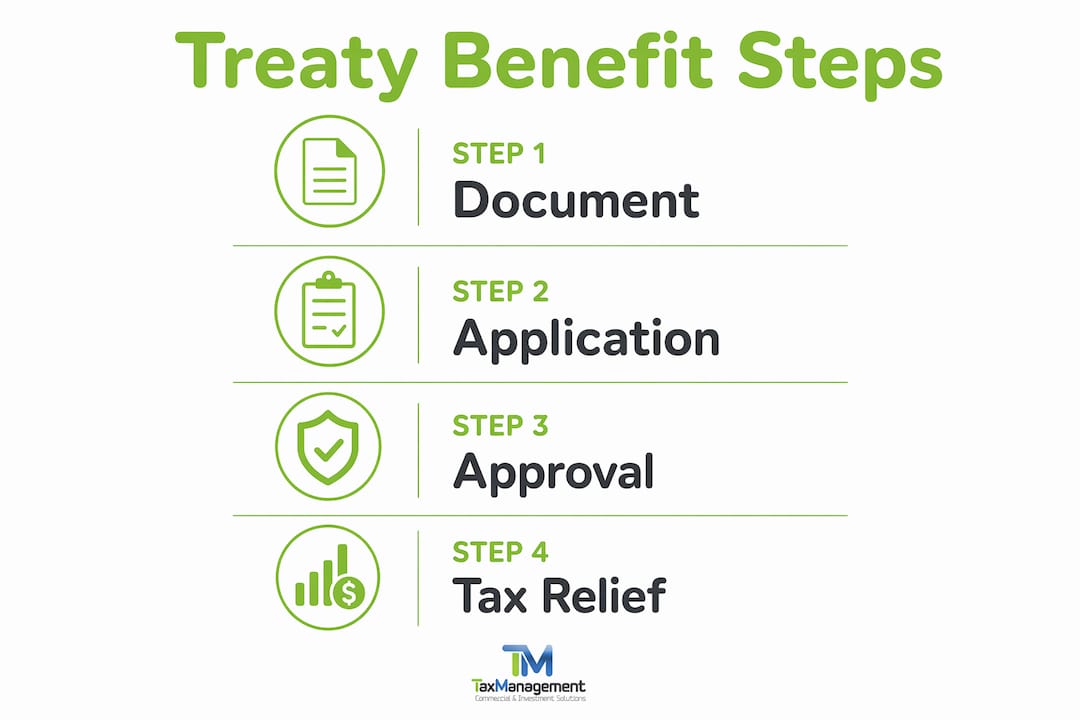
Treaty benefits in Bulgaria are not automatic. Procedural compliance under the Tax and Social Insurance Procedure Code (TSIPC) is mandatory, and missing a step can result in the full domestic withholding rate being applied. The TSIPC establishes two distinct procedures: simplified and standard.
The simplified procedure applies when the annual income paid to a foreign recipient does not exceed approximately €255,000. The standard procedure applies for amounts above that threshold and requires a formal application to Bulgaria’s National Revenue Agency (NRA) before the income is paid.
The steps for the simplified procedure are as follows:
- The Bulgarian payer collects all required documentation from the foreign income recipient before making the payment.
- The payer verifies that the recipient qualifies as a tax resident of the treaty country by obtaining a valid tax residence certificate.
- The payer applies the reduced treaty rate at source when making the payment.
- The payer retains all documentation and files an annual declaration with the NRA by march 31 of the following year.
For the standard procedure, the foreign recipient or the Bulgarian payer submits a formal application to the NRA. The NRA then issues a ruling confirming whether treaty relief applies. This process requires advance planning because the ruling must be obtained before the payment is made.
Pro Tip: Generic tax residence certificates do not qualify for treaty relief in Bulgaria. The certificate must specifically confirm that the recipient is a tax resident of the treaty country for the relevant tax year. Request this document from the recipient’s home tax authority well before the payment date.
A common and costly error is treating treaty benefits as automatic without adequate documentation. UK companies that receive Bulgarian-source income must coordinate with their Bulgarian counterparty to confirm that the correct procedure has been followed before any payment is made.
What does the Bulgaria-UK treaty cover?
The Bulgaria-UK double tax treaty, updated through the OECD Multilateral Instrument (MLI), is the primary legal instrument governing cross-border taxation between the two countries. Bulgaria participates in the MLI, which modifies existing bilateral treaties to incorporate updated anti-abuse rules and dispute resolution mechanisms. UK companies must account for the timing rules introduced by the MLI, because treaty modifications take effect on different dates depending on the type of tax involved.
The treaty covers the following key areas relevant to UK businesses:
- Permanent establishment: A UK company is only taxable in Bulgaria on business profits if it maintains a fixed place of business or dependent agent in Bulgaria.
- Dividends: Reduced withholding rates apply when the UK parent company holds a qualifying stake in the Bulgarian subsidiary.
- Interest and royalties: Treaty rates reduce the standard 10% domestic withholding tax, subject to beneficial ownership conditions.
- Mutual agreement procedure: If a UK company believes it has been taxed contrary to the treaty, it can submit a case to the competent authorities of both countries for resolution.
- Anti-abuse provisions: The MLI introduces a principal purpose test, which denies treaty benefits if obtaining those benefits was one of the principal purposes of an arrangement.
“UK companies must time withholding tax procedure changes around the effective dates of treaty modifications via the MLI to avoid compliance gaps.” — GOV.UK, Synthesised Text of the MLI and the 2015 UK-Bulgaria Double Taxation Convention
The anti-abuse provisions deserve particular attention. The principal purpose test is a subjective standard, and Bulgarian tax authorities can challenge arrangements that appear designed primarily to obtain treaty benefits. UK companies should document the genuine commercial rationale for their Bulgarian operations and intercompany arrangements.
How can UK companies maximize Bulgaria’s treaty benefits?
Effective use of Bulgaria’s treaty network requires planning, not just compliance. The Bulgaria tax agreements framework rewards companies that prepare documentation in advance and monitor treaty developments. The following practices define the difference between companies that capture full treaty benefits and those that pay avoidable withholding taxes.
- Obtain tax residence certificates early. Request the certificate from HMRC or the relevant UK authority well before any Bulgarian income payment is due. Processing times vary, and a late certificate means the payer must apply the domestic rate at source.
- Map income types before contracting. Identify whether payments will be classified as dividends, interest, royalties, or service fees under the treaty. Each category carries different rates and documentation requirements.
- Monitor MLI effective dates. Treaty modifications introduced by the MLI apply from specific dates. UK companies should review the synthesised treaty text annually to confirm which provisions are currently in force.
- Coordinate with the Bulgarian payer. The Bulgarian entity bears primary responsibility for withholding and filing. UK recipients should confirm that their counterparty has the correct documentation and understands the applicable procedure.
- Plan for the standard procedure threshold. For income above €255,000 annually, the NRA application process requires advance planning. Build the application timeline into your contract and payment schedule.
- Engage advisors with Bulgarian tax law expertise. Bulgaria’s flat corporate tax rate of 10% combined with treaty-reduced withholding rates creates a genuinely competitive tax position. Realizing that position requires advisors who understand both Bulgarian domestic law and the treaty framework.
Pro Tip: If your UK company is considering establishing a Bulgarian subsidiary, review the tax optimization options available under Bulgarian law alongside the treaty framework. The combination of a 10% corporate tax rate and treaty-reduced withholding taxes on outbound payments can significantly reduce the overall effective tax rate on EU operations.
A practical scenario illustrates the value of preparation. A UK software company licenses intellectual property to a Bulgarian distributor. Without a treaty claim, Bulgaria withholds 10% on royalty payments. With a valid UK tax residence certificate and proper TSIPC compliance, the withholding rate drops to 0%–5% under the Bulgaria-UK treaty. On annual royalties of €200,000, that difference represents up to €20,000 in retained income per year.
Working with Taxmanagement on Bulgarian treaty compliance
UK entrepreneurs who want to register a company in Bulgaria and claim treaty benefits need more than general tax knowledge. They need advisors who understand Bulgaria’s TSIPC procedures, NRA filing requirements, and the current state of the Bulgaria-UK treaty as modified by the MLI. Taxmanagement has supported more than 1,500 international firms over 20 years, combining legal, accounting, and administrative expertise to handle company registration and ongoing tax compliance in Bulgaria. The team assists UK companies with gathering the correct documentation, meeting declaration deadlines, and structuring intercompany arrangements that withstand anti-abuse scrutiny. For companies ready to act, Taxmanagement’s accounting and bookkeeping services provide the ongoing compliance support that treaty benefit claims require.
Key takeaways
Bulgaria’s double tax treaty network gives UK companies a legally certain framework for reducing withholding taxes and avoiding double taxation, but only when procedural requirements are met in full.
| Point | Details |
|---|---|
| Treaty precedence over domestic law | Bulgarian law gives ratified treaty provisions priority over conflicting domestic tax rules. |
| Over 70 treaties, including the UK | Bulgaria’s OECD-aligned treaty network covers all major trading partners and EU members. |
| Simplified vs. standard procedure | Income below €255,000 uses the simplified procedure; above that threshold requires a formal NRA application. |
| Tax residence certificate is mandatory | A valid, country-specific certificate is required to apply reduced treaty rates at source. |
| MLI modifies the Bulgaria-UK treaty | Anti-abuse rules and timing changes from the MLI apply to the Bulgaria-UK treaty and must be monitored annually. |
FAQ
What is the role of double tax treaties in Bulgaria?
Double tax treaties in Bulgaria allocate taxing rights between Bulgaria and partner countries to prevent the same income from being taxed twice. Treaty provisions override conflicting Bulgarian domestic tax law once ratified and in force.
Does Bulgaria have a double tax treaty with the UK?
Yes. Bulgaria and the UK have a bilateral double tax treaty, updated through the OECD Multilateral Instrument. The synthesised treaty text is published by GOV.UK and reflects current anti-abuse provisions and withholding tax rules.
How do UK companies claim treaty benefits in Bulgaria?
UK companies must provide a valid tax residence certificate to the Bulgarian payer before the payment is made. For annual income below €255,000, the simplified TSIPC procedure applies; above that threshold, a formal NRA application is required.
Are treaty benefits in Bulgaria automatic?
No. Treaty benefits require procedural compliance under the TSIPC, including correct income classification, valid documentation, and timely filing. Treating benefits as automatic without documentation is the most common compliance error.
What withholding taxes apply in Bulgaria without a treaty claim?
Bulgaria’s domestic withholding tax rates are 5% on dividends and 10% on interest and royalties. Treaty provisions can reduce these rates, in some cases to zero, but only when the recipient meets all documentation requirements.