


Summary
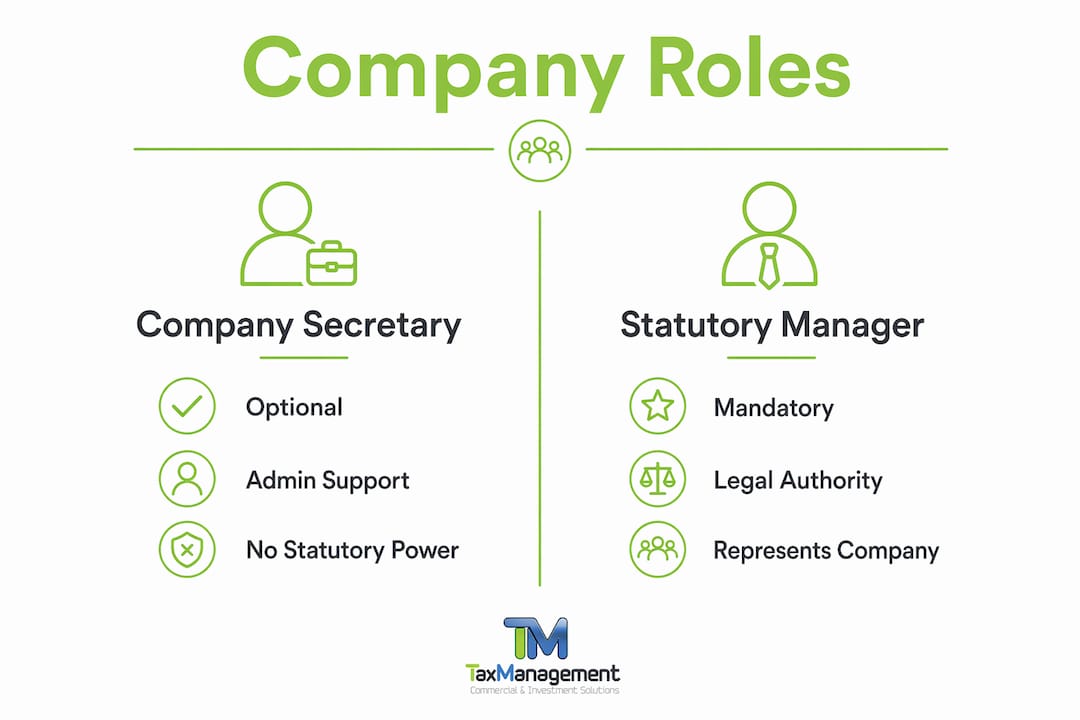
- In Bulgaria, a company secretary provides administrative support without legal authority, while the statutory manager manages and represents the company.
- The manager bears legal responsibility and signs all official filings, including annual financial statements due by September 30.
The role of company secretary in Bulgaria is defined as an internal administrative and governance support function, distinct from the statutory management authority held by a company’s registered director. Foreign founders and entrepreneurs frequently confuse the two roles, assuming a company secretary carries the same legal weight as a statutory manager. That assumption creates compliance gaps. Understanding the distinction protects your company from procedural errors, missed filings, and accountability conflicts under Bulgarian corporate law.
What is the role of company secretary in Bulgaria?
A company secretary in Bulgaria is not a statutory officer. The position is an internal staffing role focused on administrative support, governance documentation, and communication coordination. Tasks typically include drafting correspondence, keeping meeting minutes, organizing shareholder and board meetings, and preparing documentation for regulatory submissions. This administrative secretary function does not grant legal authority to represent the company before third parties or public authorities.

The term “company secretary” is borrowed from jurisdictions like the United Kingdom, where the role carries statutory weight under the Companies Act. In Bulgaria, no equivalent statutory requirement exists. The recognized industry term in Bulgarian corporate practice is “secretary of the management board” or simply an administrative secretary supporting governance functions. Both terms describe the same non-statutory, support-oriented position.
This distinction matters for international businesses registering in Bulgaria. A company secretary cannot sign contracts, submit filings to the Bulgarian Commercial Register, or act as the company’s legal representative. Those powers belong exclusively to the statutory manager.
What are the statutory management and representation roles in Bulgarian companies?
The statutory manager holds all legal authority to manage and represent a Bulgarian company. Under Article 141 of the Bulgarian Commercial Act, the manager organizes and directs company activities and represents the company before third parties. This is the role that carries personal legal liability, not the company secretary.
The manager’s responsibilities are broad and legally defined:
- Legal representation: The manager signs contracts, opens bank accounts, and represents the company in court and before public authorities.
- Day-to-day operational authority: The manager makes binding decisions on staffing, procurement, and business operations.
- Registration obligations: The manager’s name, identity, and appointment terms are registered in the Bulgarian Commercial Register, a public database maintained by the Registry Agency.
- Personal liability: The manager bears direct legal and financial liability for decisions made on behalf of the company.
- Contractual appointment: The manager is appointed under a Management and Control Agreement (known in Bulgarian practice as a DUK contract), which differs from a standard employment contract in terms of risk, insurance obligations, and legal standing.
The DUK contract is a critical detail for foreign founders. It governs the manager’s duties, compensation, and liability exposure. Managers undertake personal risk under this agreement, which is why the role cannot be delegated informally to an administrative secretary. The legal forms of companies in Bulgaria determine how many managers a company must appoint and what their specific powers are.
Bulgarian law’s clear division between manager and company secretary roles prevents conflicts of interest and clarifies accountability. That clarity is especially valuable for international businesses where governance structures may differ significantly from home-country norms.
How does a company secretary support corporate governance and compliance in Bulgaria?
A company secretary facilitates communication between the board of directors, shareholders, and regulatory bodies. The role is the administrative backbone of good corporate governance, even without statutory authority. For growing companies with active shareholders or multiple board members, this support function becomes operationally significant.
The typical duties of a company secretary in Bulgaria include:
- Preparing meeting minutes: Documenting decisions made at general meetings and board sessions, with accurate records that can withstand regulatory scrutiny.
- Organizing meetings: Sending notices, preparing agendas, and coordinating attendance for shareholder and management meetings.
- Maintaining statutory registers: Keeping internal records of share ownership, board resolutions, and governance decisions.
- Handling correspondence: Managing formal communications with shareholders, auditors, legal advisors, and public authorities.
- Filing coordination: Preparing documentation packages for submission to the Commercial Register or tax authorities, for the manager’s review and signature.
- Monitoring compliance deadlines: Tracking annual filing dates, audit requirements, and regulatory changes that affect the company.
The company secretary does not make decisions. The role prepares, organizes, and documents. That separation keeps the manager focused on operational and strategic decisions while governance records remain accurate and current.
Pro Tip: Assign your company secretary a compliance calendar with all annual deadlines, including the 30 september financial statement filing date and any audit thresholds. A missed deadline costs more to fix than to prevent.
Separating secretarial tasks into governance drafting and regulatory filing readiness improves compliance oversight without diluting manager accountability. Companies that blur this line often find that neither role is performed well.
Is appointing a company secretary mandatory or optional for Bulgarian companies?
Bulgarian law does not require the appointment of a company secretary. The position is entirely optional. This contrasts with jurisdictions such as the United Kingdom, Singapore, and Hong Kong, where private or public companies must appoint a qualified company secretary as a statutory officer.
| Jurisdiction | Company Secretary Required? | Statutory Authority? |
|---|---|---|
| Bulgaria | No, optional | No statutory authority |
| United Kingdom | Yes, for public companies | Yes, statutory officer |
| Singapore | Yes, all companies | Yes, statutory officer |
| Hong Kong | Yes, all companies | Yes, statutory officer |
| Germany | No | No equivalent role |
For small companies with a single manager and one or two shareholders, the manager often handles secretarial tasks directly. For larger or more complex structures, particularly those with international shareholders, a dedicated company secretary prevents governance gaps and reduces the manager’s administrative burden.
The practical implication is straightforward. If your Bulgarian company holds regular shareholder meetings, maintains detailed governance records, or coordinates with multiple advisors and authorities, appointing a company secretary is a sound operational decision, even without a legal mandate.
How do company secretaries and statutory managers collaborate effectively?
Effective collaboration between a company secretary and a statutory manager depends on clear role separation. The operational efficiency pattern for Bulgarian companies assigns governance drafting and filing readiness to the secretary, while management decisions remain with the manager.
Practical collaboration workflows include:
- Filing preparation: The company secretary assembles the documentation package for annual financial statement submissions. The manager reviews and signs. Neither role substitutes for the other.
- Meeting management: The secretary prepares the agenda, sends notices to shareholders, and records minutes. The manager chairs the meeting and makes decisions.
- Deadline tracking: The secretary maintains a compliance calendar and alerts the manager to upcoming deadlines. The manager authorizes submissions and signs required documents.
- Correspondence management: The secretary drafts formal letters and communications. The manager approves and signs where legal authority is required.
- Documentation templates: Using standardized templates for minutes, resolutions, and correspondence reduces errors and speeds up governance processes.
Pro Tip: Draft a written role description for your company secretary at the time of appointment. Define exactly which tasks require manager sign-off and which the secretary handles independently. This prevents accountability gaps during audits or regulatory reviews.
Clear accountability between the secretary and manager also matters during due diligence processes. Investors and acquirers reviewing a Bulgarian company expect well-organized governance records. A company secretary who maintains those records consistently adds measurable value to the company’s compliance profile.
What are the key compliance and filing obligations relevant to company secretaries in Bulgaria?
Company secretaries in Bulgaria play a central role in coordinating the annual compliance cycle. The most time-sensitive obligation is the annual financial statement filing.
| Obligation | Deadline | Responsible Party | Notes |
|---|---|---|---|
| Annual financial statements | 30 september each year | Manager signs; secretary coordinates | Includes balance sheet, income statement |
| Statutory audit report | 30 september (where applicable) | Auditor prepares; secretary coordinates submission | Required for medium and large companies |
| Commercial Register updates | Within 7 days of change | Manager signs; secretary prepares documents | Covers address, management, capital changes |
| General meeting minutes | Within statutory period | Secretary prepares; manager approves | Required for all shareholder resolutions |
The role of statutory audit in Bulgaria applies to medium and large enterprises. A mandatory audit is triggered when a company exceeds two of three thresholds: €1,000,000 in total assets, €2,000,000 in net revenue, or 50 employees. These audit thresholds are defined under Bulgarian accounting law and align with EU Directive 2013/34/EU on annual financial statements. The company secretary coordinates with the external auditor to collect required documentation and meet submission deadlines.
For companies where the manager is based outside Bulgaria, a power of attorney may authorize a local representative to submit filings. The company secretary often prepares the power of attorney documentation for the manager’s signature and notarization. This is a common workflow for international businesses operating through a Bulgarian subsidiary.
TaxManagement supports your Bulgarian company’s governance needs
TaxManagement has assisted more than 1,500 firms with company registration and compliance in Bulgaria over more than 20 years. The team combines legal, accounting, and administrative expertise to support both statutory management obligations and internal governance functions. Whether you need help structuring the manager’s appointment, preparing annual filings, or setting up governance documentation from day one, Taxmanagement provides end-to-end support. You can register your company in Bulgaria with full compliance support built in, or review the documents required for registration to prepare your governance structure before you begin.
Key takeaways
The company secretary role in Bulgaria is a voluntary administrative function that supports statutory compliance, while all legal authority and representation remain exclusively with the registered statutory manager.
| Point | Details |
|---|---|
| Secretary role is not statutory | Bulgarian law does not require a company secretary; the position is optional and carries no legal authority. |
| Manager holds all legal powers | Under Article 141 of the Bulgarian Commercial Act, only the statutory manager can represent and bind the company. |
| Filing deadline is fixed | Annual financial statements must be filed by 30 september each year, with the manager signing all documents. |
| Audit thresholds apply | Companies exceeding €1,000,000 in assets, €2,000,000 in revenue, or 50 employees require a mandatory statutory audit. |
| Role separation improves governance | Assigning secretarial tasks separately from management decisions reduces compliance risk and improves accountability. |
FAQ
What does a company secretary do in Bulgaria?
A company secretary in Bulgaria handles administrative and governance support tasks, including preparing meeting minutes, organizing shareholder meetings, maintaining internal registers, and coordinating regulatory filings. The role carries no statutory authority and cannot legally represent the company.
Is a company secretary required by Bulgarian law?
No. Bulgarian law does not mandate the appointment of a company secretary. The role is optional and is typically adopted by companies with active governance needs or multiple shareholders.
What is the difference between a company secretary and a statutory manager in Bulgaria?
The statutory manager holds legal authority to represent and manage the company under the Bulgarian Commercial Act. The company secretary is an administrative support role with no legal authority to bind the company or sign official documents.
When does a Bulgarian company need a statutory audit?
A statutory audit is mandatory when a Bulgarian company exceeds two of three thresholds: €1,000,000 in total assets, €2,000,000 in net revenue, or 50 employees. The audit report must be included in the annual financial statement filing by 30 september.
Can a company secretary submit filings to the Bulgarian Commercial Register?
A company secretary can prepare filing documentation, but the statutory manager must sign all submissions. Where the manager is abroad, a notarized power of attorney can authorize a local representative to submit documents on the manager’s behalf.